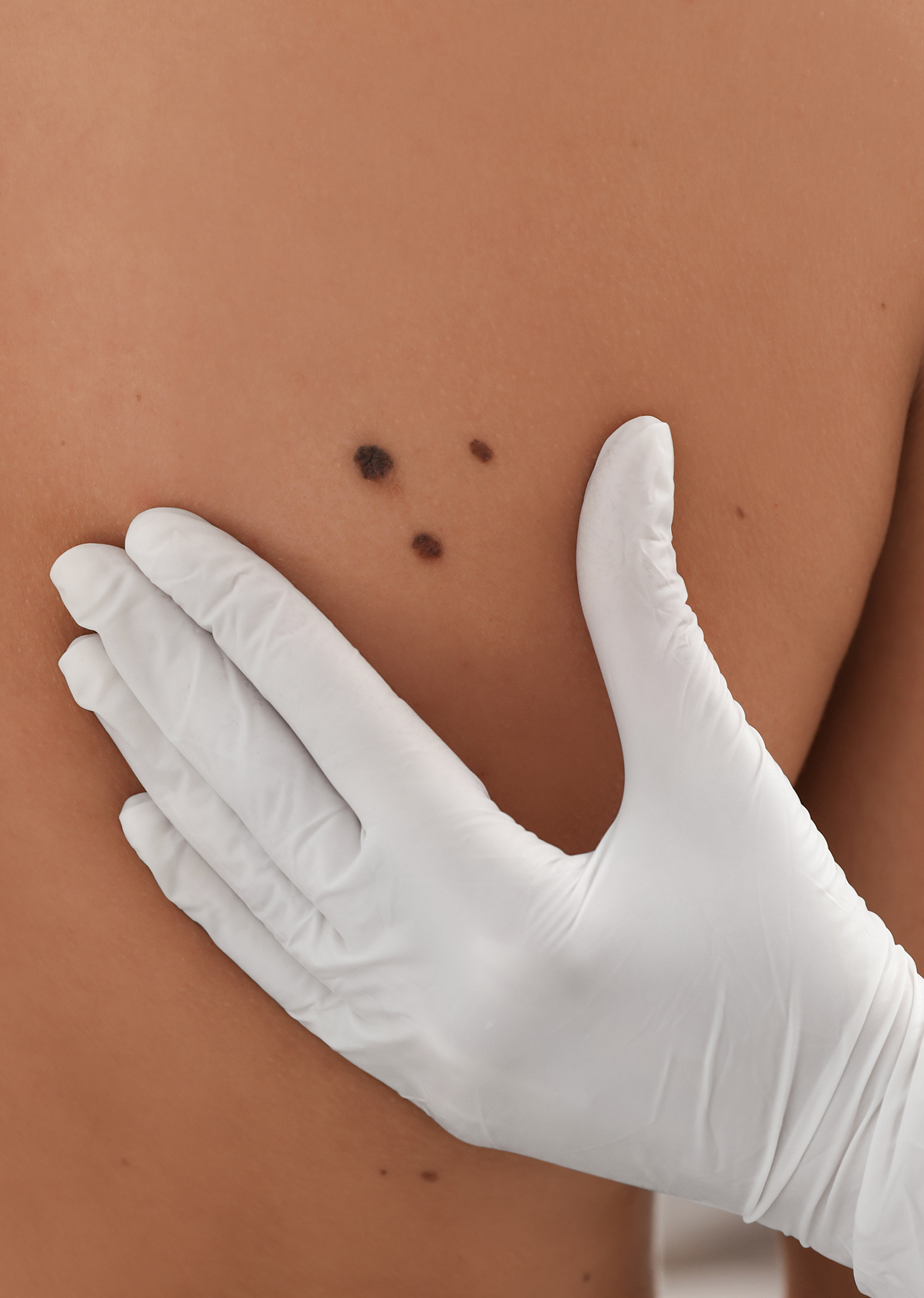
What Can We Assess?
Our doctors can assess a wide range of moles, spots and skin lesions, including:
- New or recently noticed moles
- Moles that have changed in size, shape or colour
- Dark, irregular or unusually pigmented lesions
- Lesions that itch, bleed or become crusted
- Persistent scaly or rough patches
- Sores that do not heal
- New or changing skin growths
- Raised, unusual or concerning lesions
- Other skin changes you would like assessed
If you have noticed something different about your skin, it is important not to ignore it. A professional assessment can help determine the appropriate next step based on the lesion and your individual circumstances.
What Happens During a Mole & Lesion Assessment?
Your appointment begins with a discussion about the lesion and any changes you have noticed. The area will then be examined clinically. Where appropriate, your doctor may use a dermatoscope to examine the lesion more closely.
Depending on the clinical findings, your doctor may recommend:
- Short-term monitoring of the lesion
- Ongoing skin surveillance
- Total body photography, where appropriate
- A skin biopsy for further assessment
- Complete surgical excision
- Another treatment or management approach suited to the findings
Your doctor can explain the findings and discuss why a particular approach may be recommended.
A Changing Mole Should Be Assessed
Changes to a mole or lesion can be a reason to arrange a professional assessment. While changes do not always indicate skin cancer, they should not simply be ignored.
It may be worth having a mole or lesion checked if you notice:
- An increase in size
- A change in shape or border
- New or uneven colouring
- Persistent itching or irritation
- Bleeding or crusting without an obvious cause
- A sore that does not heal
- A lesion that looks noticeably different from others on your skin
Regularly becoming familiar with your skin can make it easier to notice new or changing spots. If something appears different or concerns you, an assessment can help clarify whether further investigation is needed.
Do Not Ignore Changes in Your Skin
Your skin can change over time, and many changes may be harmless. However, a new mole, a changing spot, or a persistent lesion deserves professional attention if it concerns you.
Early assessment can help identify whether a lesion requires monitoring, further investigation or treatment. Rather than waiting for a concerning spot to change further, arranging an appointment can provide clarity and help determine the most appropriate next step.