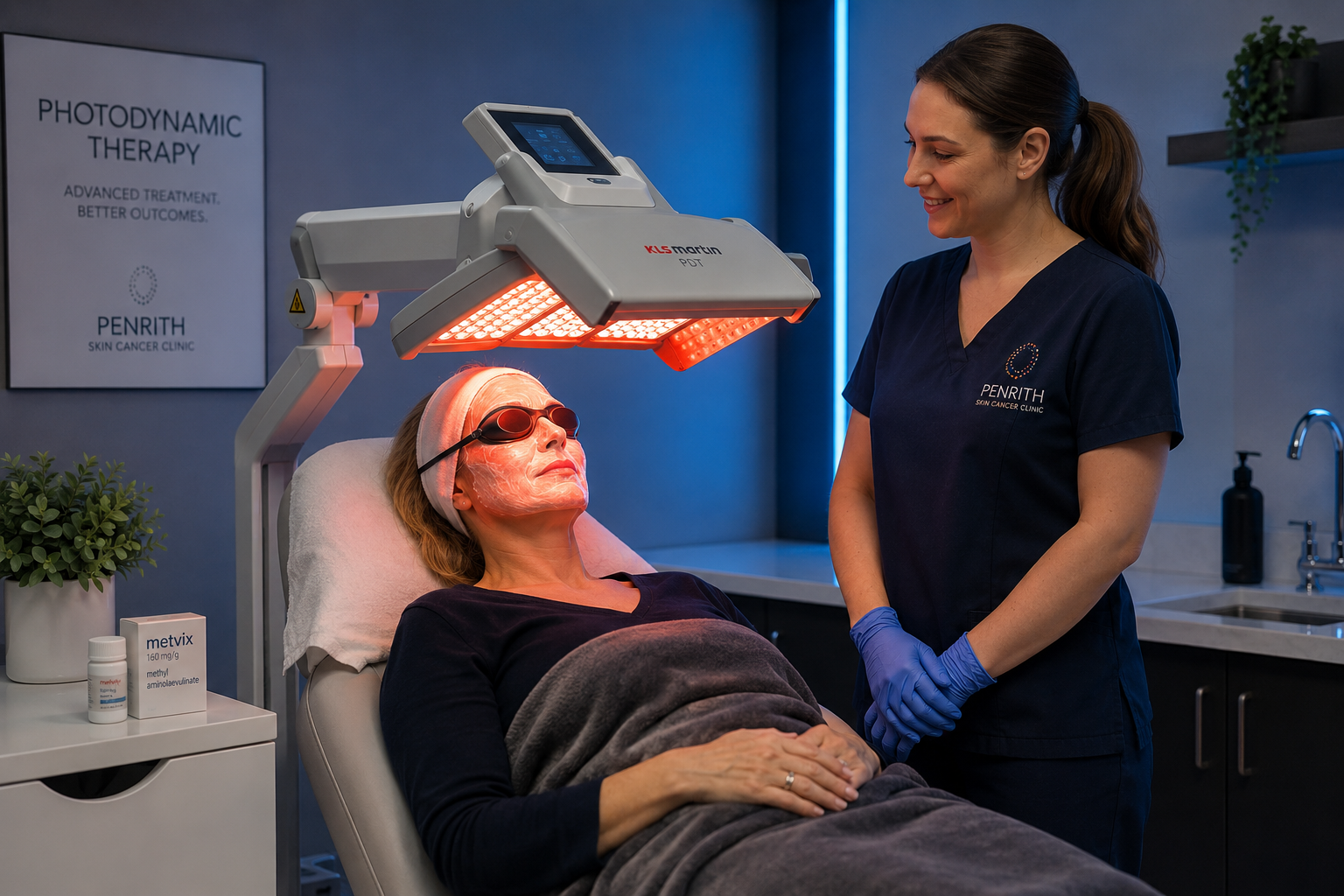
What Is Photodynamic Therapy?
PDT combines a photosensitising medication with a specific light source. The medication is applied to the affected area and allowed to absorb into the skin during an appropriate preparation period.
The treated area is then exposed to controlled light, which activates the medication and produces a reaction that targets abnormal cells. The exact treatment process can vary depending on the lesion and the treatment plan recommended by your doctor.
What Can PDT Be Used For?
- Actinic keratoses
- Superficial basal cell carcinomas
- Areas of sun-damaged skin
- Other suitable superficial lesions
What Does PDT Feel Like?
Some patients experience discomfort, warmth, tingling or a stinging sensation while the light treatment is being administered. The experience can vary depending on the individual and the area being treated.
Following PDT, temporary redness, swelling, crusting or increased sensitivity may occur. Your doctor will explain possible reactions and advise you on appropriate aftercare.
Experienced Skin Cancer Care
Penrith Skin Cancer Clinic provides assessment and treatment for a range of skin cancer concerns. Dr Mesbah Alam holds a Diploma in Skin Cancer Medicine and Surgery and a Diploma in Dermatoscopy, with the wider team bringing experience in skin cancer diagnosis and surgery.
If you have a sun-damaged area, actinic keratosis or a diagnosed superficial skin lesion, speak with the team to find out whether Photodynamic Therapy may be appropriate for you.